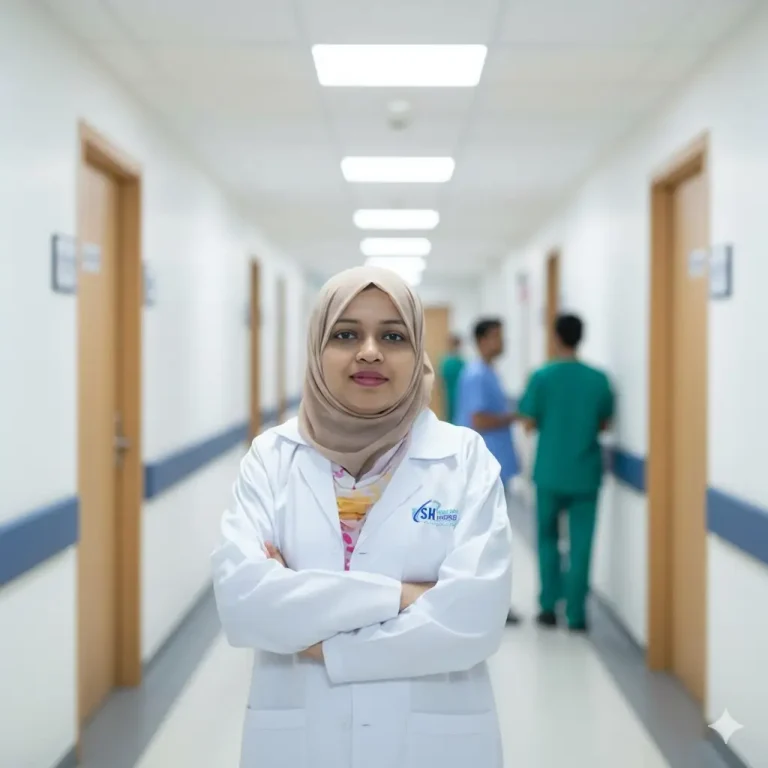
The Ultimate Guide to National Institute of Neurosciences & Hospital (NINS): Precision Care in Dhaka
The National Institute of Neurosciences & Hospital (NINS) stands as a monumental pillar of specialized healthcare in Bangladesh. Located in the heart of the capital’s medical hub at Sher-e-Bangla Nagar, Dhaka-1207, NINS is not just a hospital; it is a center of excellence dedicated to the intricate world of the human nervous system. Since its inauguration in 2012, it has evolved into a diagnostic powerhouse, offering cutting-edge neurological and neurosurgical care that was once only available abroad.
The core mission of NINS is simple yet profound: to provide precision-driven, compassionate, and affordable neurological care to every citizen. As a premier government-run tertiary facility, it bridges the gap between high-end medical technology and the community’s need for accessible treatment. Whether it is a complex brain tumor surgery or the management of chronic epilepsy, NINS is equipped to handle the most delicate challenges of the brain, spine, and nerves.
The Medical Significance of Specialized Neurology
Neurological disorders are among the leading causes of disability and mortality worldwide. The “Ultimate Guide” to NINS begins with an understanding of why such a specialized facility is vital. The human nervous system controls everything from our heartbeat to our ability to solve complex equations. When this system fails, the impact is devastating.
Department of Neurology: The Science of Brain Health
The Neurology Department at NINS is the first line of defense against disorders such as Stroke, Epilepsy, Parkinson’s Disease, and Multiple Sclerosis. Neurology is significant because many brain conditions are progressive. Early intervention by expert neurologists can halt the progression of neurodegenerative diseases, preserving a patient’s cognitive function and independence.
-
Stroke Management: Every minute counts during a stroke. NINS features a specialized 100-bedded Stroke Unit, the largest of its kind in the country. Rapid thrombolysis and post-stroke care significantly reduce the risk of permanent paralysis.
-
Epilepsy Care: Through advanced EEG and video monitoring, NINS provides hope to thousands of epilepsy patients, ensuring they can lead seizure-free lives through precise medication management or surgical referrals.
Neurosurgery: The Art of Precision
While neurology manages disorders with medicine, Neurosurgery intervenes when physical abnormalities—like tumors, trauma, or vascular malformations—threaten the brain or spine. The medical significance of neurosurgery lies in its life-saving potential. A timely surgery for a Subdural Hematoma or a Brain Tumor can mean the difference between life and death.
NINS operates with six state-of-the-art operation theaters, where surgeons perform Micro-neurosurgery and Neuro-endoscopy. These minimally invasive techniques allow for faster recovery times and less damage to healthy brain tissue, which is critical for maintaining motor functions and speech.
Expanding the Scope: Integrated Medical Specialties
While NINS is a neuroscience giant, it understands that the brain does not exist in isolation. The hospital integrates several medical disciplines to provide holistic care.
The Significance of Internal Medicine & Cardiology
In a specialized hospital like NINS, the Department of Internal Medicine and Cardiology play a critical supportive role. Many neurological issues, specifically Ischemic Strokes, are rooted in cardiovascular health.
“Understanding the heart-brain connection is vital. Early cardiac screening can identify atrial fibrillation or carotid artery disease, which are primary triggers for stroke. By managing hypertension and heart health, we prevent the neurological catastrophes of tomorrow.”
By integrating medicine and cardiology, NINS ensures that patients with co-morbidities—such as diabetes or heart disease—are stabilized before and after neurosurgery, reducing perioperative risks and improving overall survival rates.
Pediatric Neurology & Neurosurgery: Protecting Young Minds
The developing brain of a child requires specialized attention. The Pediatric Neurology department at NINS addresses congenital disorders, developmental delays, and pediatric epilepsy. Early diagnosis in children is medically significant because the young brain has higher “plasticity”—the ability to adapt and heal. Correcting a Hydrocephalus (fluid on the brain) or treating Meningitis early prevents lifelong intellectual disabilities.
Physical Medicine & Neurorehabilitation: Improving Mobility
Often, the journey doesn’t end after surgery or a stroke; it begins with rehabilitation. This department mirrors the significance found in Orthopedics. Just as orthopedic intervention improves geriatric mobility after a hip fracture, Neurorehabilitation uses physiotherapy and occupational therapy to “re-wire” the brain after injury. This process is essential for returning patients to their workplace and restoring their dignity and quality of life.
[Insert Link to Doctor List]
Diagnostic Excellence: The Backbone of Modern Medicine
At the National Institute of Neurosciences & Hospital, the diagnostic wing is the engine that drives clinical decisions. Without accurate imaging and laboratory results, even the most skilled surgeon is “operating in the dark.”
High-Tesla MRI: Peering into the Soul of the Brain
NINS utilizes High-Tesla MRI (3.0T) technology. A high-Tesla magnet provides superior image resolution, allowing radiologists to see lesions, micro-bleeds, or fiber tract disruptions that a standard MRI might miss.
-
Functional MRI (fMRI): This technology maps brain activity by measuring blood flow, helping surgeons avoid “eloquent” areas (speech and motor centers) during tumor removal.
-
MR Spectroscopy (MRS): This helps in metabolic characterization of brain lesions, distinguishing between tumors and infections without a biopsy.
Advanced CT Scan and Angiography
The CT Scan facility at NINS is optimized for speed—crucial for emergency trauma and stroke cases. Their CT Angiogram services allow for a non-invasive look at the brain’s blood vessels, identifying aneurysms or blockages within seconds. For even more precise interventions, the hospital’s Cath Lab offers Digital Subtraction Angiography (DSA), the gold standard for vascular neuro-imaging.
Laboratory Medicine: Pathology & Biochemistry
The automated laboratory at NINS handles everything from routine blood counts to complex Neuropathology and Biochemistry. Accurate cerebrospinal fluid (CSF) analysis is vital for diagnosing neuro-infections and autoimmune disorders. The integration of molecular biology and genetic counseling further positions NINS as a leader in identifying rare neurological conditions.
Diagnostic Test Prices: Transparency and Affordability
As a government institute, NINS offers services at a fraction of the cost of private diagnostic centers. Below is a representative table of common diagnostic tests.
MRI and CT Scan Price List
| Test Name | Price (BDT) – Govt. Rate | Significance |
| MRI of Brain (Plain) | 3,000 | Baseline for most neurological symptoms. |
| MRI of Brain with Contrast | 4,000 | Vital for identifying tumors and inflammation. |
| MRI of Brain + MRA + MRV | 6,000 | Complete vascular mapping of the brain. |
| MRI of Spine (Cervical/Lumbar) | 3,000 | Diagnosis of disc prolapse and nerve compression. |
| CT Scan of Brain/Head | 2,000 | Immediate detection of hemorrhage or fractures. |
| CT Angiogram (Brain/Neck) | 4,000 | Visualizing arterial blockages or aneurysms. |
| MR Spectroscopy (MRS) | 3,000 | Chemical analysis of brain tissues. |
Laboratory and Other Tests
| Test Category | Test Name | Price (BDT) |
| Cardiology | ECG | 80 |
| Cardiology | Echocardiogram (Color Doppler) | 600 |
| Pathology | Blood Culture / Urine Culture | 200 |
| Pathology | CSF for Gram & AFB Staining | 30 |
| Imaging | USG of Whole Abdomen | 220 |
| Imaging | X-Ray Chest / Spine | 150 – 200 |
[Insert Link to Test Prices]
Emergency & Inpatient Care: 24/7 Commitment
Neurological emergencies—be it a sudden stroke, a seizure, or a traumatic head injury—do not wait for office hours. NINS operates a 24/7 Casualty and Emergency Service staffed by dedicated Emergency Medical Officers (EMO).
The Inpatient Experience
NINS is currently a 500-bed hospital, with a massive 500-bed expansion building recently added to meet the overwhelming demand. The hospital offers a range of accommodations:
-
General Wards: Designed to provide high-quality care at a nominal cost, ensuring no patient is turned away due to financial constraints.
-
VIP Cabins: For patients seeking more privacy and personalized surroundings, these cabins offer modern amenities while maintaining strict clinical standards.
-
ICU & HDU: The 16-bed Intensive Care Unit (ICU) and 12-bed High Dependency Unit (HDU) are the nerve centers of the hospital, equipped with advanced ventilators and monitoring systems for critically ill patients.
The patient experience is anchored by a dedicated nursing staff and a focus on hygiene and infection control. Regular rounds by senior consultants ensure that even in general wards, the standard of care remains world-class.
Pioneering Features: Why Choose NINS?
NINS stands out in the South Asian medical landscape due to several unique features:
-
Interventional Neurology: NINS is a pioneer in “brain stenting” and coil embolization for aneurysms, allowing patients to be treated without opening the skull.
-
Specialized Clinics: Beyond general neurology, the hospital runs dedicated clinics for Epilepsy, Stroke, Headache, and Movement Disorders (Botox Clinic).
-
Automated Laboratory: Its pathology department is highly automated, reducing human error and ensuring rapid turnaround times for critical reports.
-
Academic Excellence: As a postgraduate research institute, NINS is constantly evolving. The presence of residency programs means that patients benefit from a “think-tank” environment where the latest global research is applied to local cases.
[Insert Link to Home Sample Collection]
Patient Utility: Navigating Your Visit
Planning a visit to a large tertiary hospital can be daunting. Here is the essential information for patients and their families.
How to Book an Appointment
Patients can visit the Outdoor Patient Department (OPD) from 8:00 AM to 2:00 PM. Tickets are available at the ground floor counters.
-
Online Appointments: NINS has introduced an e-appointment system to reduce wait times.
-
Referrals: While anyone can seek care, a referral from a primary doctor is often helpful for navigating the specialized units (Red, Blue, Green, etc.).
[Insert Link to Appointment Portal]
Visiting Hours & Contact Information
To ensure patient rest and recovery, visiting hours are strictly enforced:
-
Morning: 11:00 AM – 12:00 PM
-
Evening: 5:00 PM – 7:00 PM
Address:
National Institute of Neurosciences & Hospital
Sher-e-Bangla Nagar, Agargaon, Dhaka-1207, Bangladesh
Contact Details:
-
Information Desk (24/7): +880-2-41024584
-
Emergency Doctor (EMO): +880-2-41024572
-
Director’s Office: +880-2-41024570
-
Email: nins@hospi.dghs.gov.bd
-
Official Website: www.nins.gov.bd
Conclusion: A Vision for the Future
The National Institute of Neurosciences & Hospital (NINS) in Sher-e-Bangla Nagar is more than a building; it is a beacon of hope for millions. By combining the medical significance of specialized neurology with the affordability of a government institution, it has redefined healthcare in Bangladesh. From the precision of a 3.0T MRI to the steady hand of a neurosurgeon, NINS remains committed to its core mission: Excellence in Neuro-care.
For those seeking the best in brain and spine health, NINS offers a world-class diagnostic and treatment experience right here in Dhaka.
Would you like me to help you find a list of specific specialists at NINS or provide more details on their recent 500-bed expansion?